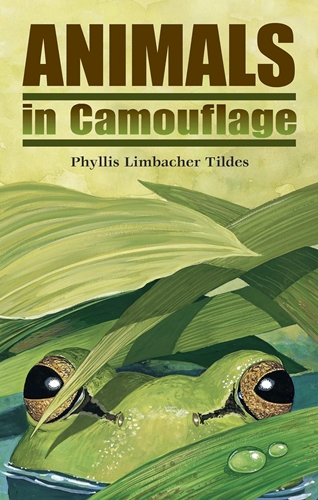
K–2 · Lesson draft
1. Objectives and success criteria
Describe coloring or shape and how it helps an animal hide.
I can name a feature and explain how it helps an animal blend in.
The source notes below qualify what this draft can currently support.
2. Materials
No purchases required: access to the selected book(s), this page or plain paper, and a pencil or an oral/drawing response. A teacher read-aloud, shared screen or existing audio access can replace independent reading. Printing is optional.
Use only these selections for this grade band. Numbers refer to the read-along’s Page-N clips, which may differ from a printed book. Clip offsets start at that page clip, not at the start of the whole book. A page can replace its caption; wait for the indicated detail.
Scroll sideways in the reading table for instructions and review status.
Reading plan: use a teacher read-aloud of the indicated sentences, capped at 200 words; do not autoplay every selected page in full. At a planning pace of 100 words per minute this reserves two minutes for reading, 90 seconds for navigation and 90 seconds for pauses. This is an estimate, not a measured classroom reading.
[VERIFY: a five-minute selected-reading rehearsal in the actual edition, including navigation and pauses.] If a source is unavailable, omit its dependent comparison and use only a checked anchor passage. If the anchor is unavailable, use the organizer to collect questions; that fallback does not meet the source-dependent science objectives.
4. Timed steps — 18 minutes
The five-minute reading slot is for selected passages. If rehearsal exceeds it, reduce the selections to one checked example. The full read is an EXTENSION.
5. Participation options
Apply the chosen mode during the organizer, share and exit response. A listening response never requires the student to read or write; written output can be scribed.
6. Exit ticket
Name a camouflage feature and explain how it helps.
7. Misconceptions to watch for
Camouflage can involve shape as well as color.
Traits and adaptations are not animal choices or wants. A survival inference must not be presented as a quoted explanation.
Fact vs. figure of speech: first-person animal riddles are a writing device. Replace implied intentions with a description of the feature and its function.
8. Printable student page
A separate, clean organizer with space to draw or write. Students may dictate or point while someone records their response.
Open K–2 student page9. Extensions
EXTENSION: Temperature adaptations only. In STEM edition 8092, read-along page 9 explains how small, furry Arctic-fox ears reduce heat loss [V]. Compare this feature/function relationship with the leaf insect’s camouflage; neither trait is a choice. Alternatively, page 5 describes penguin huddling and changing places [V]. Use one example outside the 18-minute core. The imagined penguins on a sofa on page 4 are humorous framing, not animal behavior evidence. If unavailable, omit the extension.
EXTENSION: Read the full camouflage book outside the timed lesson.
Extensions are optional teacher-created activities. They are not evidence of events or facts in the books.
10. Source verification log
[V] = supported by reviewed source text or specifically recorded page images; [P] = partly supported or inferred; [U] = unsupported by available source material. Page verification applies only where explicitly stated. These tags do not certify playback, human review or reproduction rights.
[V] 4541 links the leaf insect’s leaflike appearance with hiding from predators; the sea dragon’s leafy parts can fool hungry fish.
[P] 4541 describes a crab spider waiting for prey on flowers and changing color to match flowers. It does not explicitly state a measured hunting-survival benefit; mark that link as an inference.
[P] 4541 describes a crab spider waiting for prey on flowers and changing color to match flowers. It does not explicitly state a measured hunting-survival benefit; mark that link as an inference.
[V] Leaflike shape helps disguise the insect from predators. [P] Matching flower color may help the spider hunt; that causal link is an inference.
[VERIFY: confirm the inferred crab-spider hunting benefit in an authorized explanatory source before calling it verified.]
[P] The requested non-STEM edition 7358 has no full source text in the archive. The extension explicitly uses the catalogue-verified STEM edition 8092 instead; its fox and penguin passages were reviewed. This does not certify edition 7358. If 8092 is unavailable, omit temperature material and keep the camouflage core.
[V] Numeric reading locations in Materials were checked against the recorded page images. They certify only those selected passages, not a whole-book or audiovisual review.
[VERIFY: duration of the selected reading in the actual edition, including navigation and pauses.] The 18-minute plan is a schedule, not a measured playback claim.
Catalogue identity was cross-checked against the repository’s authenticated 7 October 2026 catalogue snapshot. A catalogue entry is not a content claim. Raw texts and page images are excluded from this site.
11. Accuracy checklist
Confirmed in this draft: No wording that animals choose, try or decide to adapt.
Confirmed in this draft: Temperature adaptation appears only in EXTENSION material.
Self-audit: no invented source quotations, page numbers or timestamps; no direct source quotations are published.
Self-audit: the timed steps total 18 minutes in this version. Selected-reading duration still requires rehearsal.
Self-audit: optional activities are labelled EXTENSION; no standards codes appear in this lesson.
Changes from the requested full lesson: kept missing locators explicit; marked source gaps/inferences; used selected passages; held unsupported activities instead of filling them from memory. This is an editorial draft, not a final accuracy approval.
Change reported in this pass: added visually checked read-along locations and grade-specific reading selections; retained every unresolved locator and the reading-rehearsal requirement.
Change reported: the temperature EXTENSION now explicitly uses reviewed STEM edition 8092 instead of the unavailable source text for 7358.
Grades 3–5 · Lesson draft
1. Objectives and success criteria
Explain feature → function → survival, separating hiding from predators and hunting where supported.
I can connect a feature to its function and support a survival explanation with evidence.
The source notes below qualify what this draft can currently support.
2. Materials
No purchases required: access to the selected book(s), this page or plain paper, and a pencil or an oral/drawing response. A teacher read-aloud, shared screen or existing audio access can replace independent reading. Printing is optional.
Use only these selections for this grade band. Numbers refer to the read-along’s Page-N clips, which may differ from a printed book. Clip offsets start at that page clip, not at the start of the whole book. A page can replace its caption; wait for the indicated detail.
Scroll sideways in the reading table for instructions and review status.
Reading plan: use a teacher read-aloud of the indicated sentences, capped at 200 words; do not autoplay every selected page in full. At a planning pace of 100 words per minute this reserves two minutes for reading, 90 seconds for navigation and 90 seconds for pauses. This is an estimate, not a measured classroom reading.
[VERIFY: a five-minute selected-reading rehearsal in the actual edition, including navigation and pauses.] If a source is unavailable, omit its dependent comparison and use only a checked anchor passage. If the anchor is unavailable, use the organizer to collect questions; that fallback does not meet the source-dependent science objectives.
4. Timed steps — 18 minutes
The five-minute reading slot is for selected passages. If rehearsal exceeds it, reduce the selections to one checked example. The full read is an EXTENSION.
5. Participation options
Apply the chosen mode during the organizer, share and exit response. A listening response never requires the student to read or write; written output can be scribed.
6. Exit ticket
Give a feature → function → survival explanation and label any inference.
7. Misconceptions to watch for
Camouflage can involve shape as well as color.
Traits and adaptations are not animal choices or wants. A survival inference must not be presented as a quoted explanation.
Fact vs. figure of speech: first-person animal riddles are a writing device. Replace implied intentions with a description of the feature and its function.
8. Printable student page
A separate, clean organizer with space to draw or write. Students may dictate or point while someone records their response.
Open Grades 3–5 student page9. Extensions
EXTENSION: Temperature adaptations only. In STEM edition 8092, read-along page 9 explains how small, furry Arctic-fox ears reduce heat loss [V]. Compare this feature/function relationship with the leaf insect’s camouflage; neither trait is a choice. Alternatively, page 5 describes penguin huddling and changing places [V]. Use one example outside the 18-minute core. The imagined penguins on a sofa on page 4 are humorous framing, not animal behavior evidence. If unavailable, omit the extension.
EXTENSION: Read the full camouflage book outside the timed lesson.
Extensions are optional teacher-created activities. They are not evidence of events or facts in the books.
10. Source verification log
[V] = supported by reviewed source text or specifically recorded page images; [P] = partly supported or inferred; [U] = unsupported by available source material. Page verification applies only where explicitly stated. These tags do not certify playback, human review or reproduction rights.
[V] 4541 links the leaf insect’s leaflike appearance with hiding from predators; the sea dragon’s leafy parts can fool hungry fish.
[P] 4541 describes a crab spider waiting for prey on flowers and changing color to match flowers. It does not explicitly state a measured hunting-survival benefit; mark that link as an inference.
[P] 4541 describes a crab spider waiting for prey on flowers and changing color to match flowers. It does not explicitly state a measured hunting-survival benefit; mark that link as an inference.
[V] Leaflike shape helps disguise the insect from predators. [P] Matching flower color may help the spider hunt; that causal link is an inference.
[VERIFY: confirm the inferred crab-spider hunting benefit in an authorized explanatory source before calling it verified.]
[P] The requested non-STEM edition 7358 has no full source text in the archive. The extension explicitly uses the catalogue-verified STEM edition 8092 instead; its fox and penguin passages were reviewed. This does not certify edition 7358. If 8092 is unavailable, omit temperature material and keep the camouflage core.
[V] Numeric reading locations in Materials were checked against the recorded page images. They certify only those selected passages, not a whole-book or audiovisual review.
[VERIFY: duration of the selected reading in the actual edition, including navigation and pauses.] The 18-minute plan is a schedule, not a measured playback claim.
Catalogue identity was cross-checked against the repository’s authenticated 7 October 2026 catalogue snapshot. A catalogue entry is not a content claim. Raw texts and page images are excluded from this site.
11. Accuracy checklist
Confirmed in this draft: No wording that animals choose, try or decide to adapt.
Confirmed in this draft: Temperature adaptation appears only in EXTENSION material.
Self-audit: no invented source quotations, page numbers or timestamps; no direct source quotations are published.
Self-audit: the timed steps total 18 minutes in this version. Selected-reading duration still requires rehearsal.
Self-audit: optional activities are labelled EXTENSION; no standards codes appear in this lesson.
Changes from the requested full lesson: kept missing locators explicit; marked source gaps/inferences; used selected passages; held unsupported activities instead of filling them from memory. This is an editorial draft, not a final accuracy approval.
Change reported in this pass: added visually checked read-along locations and grade-specific reading selections; retained every unresolved locator and the reading-rehearsal requirement.
Change reported: the temperature EXTENSION now explicitly uses reviewed STEM edition 8092 instead of the unavailable source text for 7358.