TumbleTA

Trace Connections:
Who Depends on Whom in a Habitat?

Draft for teacher review

How are living things connected to living and nonliving parts of their habitat?

18 minutes · selected passages · drawing, oral or written responses

Draft for teacher review

Review the selected reading before teaching. Source notes

Prepare this inquiry

  1. Choose your grade band above.
  2. Open the source books below, check the selected reading locations, and rehearse the five-minute reading slot. If it runs long, use one checked example.
  3. Open the student page. Choose a drawing, oral or written response and any partner or scribe support your students need.

Lesson draft. Check the selected sources and rehearse the reading before teaching.

Books for this inquiry

Explore the connected text set. Book links use your TumbleBookLibrary access. If sign-in opens the library home, return here and select the book again.

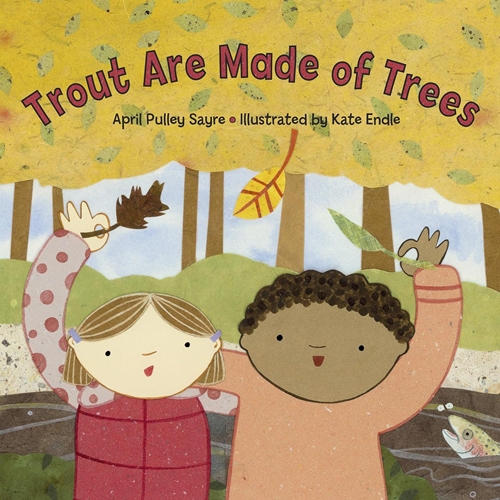
Cover of Trout Are Made of Trees

anchor

Trout Are Made of Trees

April Pulley Sayre · Book ID 4953

Open book: Trout Are Made of Trees

[V] Catalogue identity and source text present. Selected read-along locations reviewed: 6, 7, 10, 15, 17. Playback and other locations remain unverified.

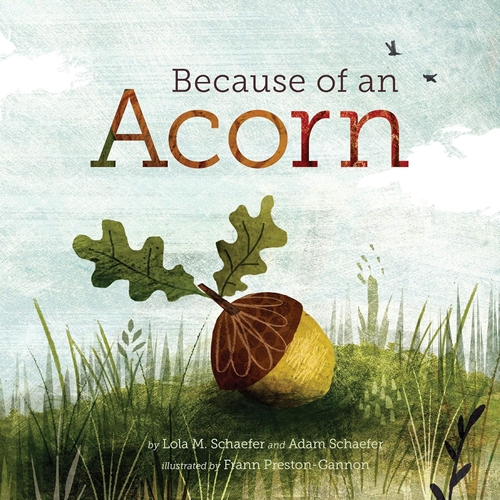
Cover of Because of an Acorn

Short companion excerpt only

Because of an Acorn

Lola M. Schaefer and Adam Schaefer · Book ID 7387

Open book: Because of an Acorn

[V] Catalogue identity and source text present. Selected read-along locations reviewed: 1, 2, 10. Playback and other locations remain unverified.

[V] Use the tree-to-perching-bird image only as a short companion comparison. If unavailable, the trout passages supply food, water and shelter. Do not repeat seed-to-tree growth here.

K–2 · Lesson draft

1. Objectives and success criteria

Identify food, water and shelter; describe one supported connection.

I can show one connection and tell what my arrow means.

The source notes below qualify what this draft can currently support.

2. Materials

No purchases required: access to the selected book(s), this page or plain paper, and a pencil or an oral/drawing response. A teacher read-aloud, shared screen or existing audio access can replace independent reading. Printing is optional.

Use only these selections for this grade band. Numbers refer to the read-along’s Page-N clips, which may differ from a printed book. Clip offsets start at that page clip, not at the start of the whole book. A page can replace its caption; wait for the indicated detail.

Scroll sideways in the reading table for instructions and review status.

Selected reading for the five-minute slot
Book / IDReading locationWhat to read or pause onReview status
Trout Are Made of Trees · 4953Read-along pages 6, 7, 17Name one pictured stream organism, read the algae-covered-leaf feeding sentence, then only the fry-hiding sentence about tree roots and fallen branches. Identify food, stream water and shelter.[V] Location visually reviewed
Because of an Acorn · 7387Read-along page 2Use this single companion image: a bird perches on a tree branch. Label only “provides a perch for”; the image does not show a nest.[V] Location visually reviewed

Reading plan: use a teacher read-aloud of the indicated sentences, capped at 200 words; do not autoplay every selected page in full. At a planning pace of 100 words per minute this reserves two minutes for reading, 90 seconds for navigation and 90 seconds for pauses. This is an estimate, not a measured classroom reading.

[VERIFY: a five-minute selected-reading rehearsal in the actual edition, including navigation and pauses.] If a source is unavailable, omit its dependent comparison and use only a checked anchor passage. If the anchor is unavailable, use the organizer to collect questions; that fallback does not meet the source-dependent science objectives.

3. Vocabulary

Vocabulary for this version
WordStudent-friendly definitionSource tag
habitatA place where an organism lives and meets its needs.[V] 4953, stream habitat discussion
food webConnected feeding relationships among living things.[V] 4953
dependencyA connection in which one thing relies on another.[P] Instructional definition; confirm selected wording.

4. Timed steps — 18 minutes

18 minutes total: 2 + 5 + 5 + 3 + 3
MinutesTeacher actionExact teacher questionsLikely responsesPartial/incorrect response and teacher move
2Introduce the question and invite an initial response.How are living things connected to living and nonliving parts of their habitat?Ideas vary; accept observations and questions without certifying guesses.If a student guesses, ask what evidence could help them check.
5Read only the selected passages listed in Materials. Pause to identify the source-supported detail.What does this organism get from the leaves? What could happen if fewer leaves entered the stream?[V] Some stream organisms eat the leaves. A prediction about fewer leaves is a possibility, not an event reported in the book.If a student draws an unlabelled arrow, ask “What does this connection do?” If trout are said to eat trees directly, retrace the intermediate feeding steps.
5Show a leaf and a leaf-eating stream organism. Add an arrow labelled “provides food for.” Name water as part of this habitat; discuss shelter only where the source supports it.What is your evidence? Which part still needs checking?[V] Some stream organisms eat the leaves. A prediction about fewer leaves is a possibility, not an event reported in the book.If a student draws an unlabelled arrow, ask “What does this connection do?” If trout are said to eat trees directly, retrace the intermediate feeding steps.
3Share through SOLO, SUPPORTED or LISTENING; students can draw, speak or dictate.What could happen if fewer leaves entered the stream?A supported explanation or an explicit verification question. Predictions stay labelled as predictions.If the response is incomplete, point back to one relevant detail rather than supplying a guessed event.
3Collect the exit response using any participation mode.Draw or say one connection and explain the arrow.Leaves provide food for stream organisms.If a student draws an unlabelled arrow, ask “What does this connection do?” If trout are said to eat trees directly, retrace the intermediate feeding steps.

The five-minute reading slot is for selected passages. If rehearsal exceeds it, reduce the selections to one checked example. The full read is an EXTENSION.

5. Participation options

Choose a mode and a response form — all nine combinations are available
ModeDrawing responseOral responseWritten response
SOLO — work independently from the page, book or organizer.Draw one example for: Draw or say one connection and explain the arrow. Add or point to the evidence.Privately rehearse an explanation, then tell it to the teacher or record it with an existing device.Complete the organizer independently and add the evidence or a verification question.
SUPPORTED — use a partner, frames, word bank or teacher prompts.Draw with a partner; use the vocabulary bank to label or dictate the key feature, stage or connection.Use the frame: “I notice __. My evidence is __. I still need to check __.” A partner can prompt.Write with a partner or scribe using the same frame. Choose words from the vocabulary table.
LISTENING — hear read-aloud/audio and respond without needing to read or write.Listen to each short passage; draw a response or point to a teacher-drawn option. The teacher supplies any labels.Listen and tell, point, gesture or use a communication aid to answer. No reading is required.Dictate to an adult or partner, who writes the response and reads it back. The student does not need to read or write.

Apply the chosen mode during the organizer, share and exit response. A listening response never requires the student to read or write; written output can be scribed.

6. Exit ticket

Draw or say one connection and explain the arrow.

Three-level exit look-for; samples are teacher-created, not book quotations
LevelLook-forSample student responseTeacher next step
Got itMeets the success criterion with source evidence or, in a gap outline, correctly identifies missing evidence.Leaves provide food for stream organisms.Offer one new checked example to transfer the explanation.
PartlyShows part of the criterion but leaves an explanation or evidence link incomplete.I connected leaves and insects but did not explain the line.Revisit one selected passage and complete the missing evidence link.
Not yetShows the listed misconception or supplies unsupported details.Trout grow on tree branches.Model one supported example and have the student point, draw or retell it.

7. Misconceptions to watch for

The title is a compressed explanation of food connections, not a claim that trout are literally wooden.

An arrow can mean food, shelter or a habitat condition; its label must say which.

Fact vs. figure of speech: the trout title compresses a scientific dependency chain into a surprising phrase. Trace its feeding steps. The acorn text is poetic; its reviewed branch image supports perching, not an invented nesting claim.

8. Printable student page

A separate, clean organizer with space to draw or write. Students may dictate or point while someone records their response.

Open K–2 student page

9. Extensions

EXTENSION: Review the rest of the habitat text set and add only source-supported connections.

EXTENSION: Read the complete trout book outside the timed lesson; a full second book is not required.

Extensions are optional teacher-created activities. They are not evidence of events or facts in the books.

10. Source verification log

[V] = supported by reviewed source text or specifically recorded page images; [P] = partly supported or inferred; [U] = unsupported by available source material. Page verification applies only where explicitly stated. These tags do not certify playback, human review or reproduction rights.

[V] 4953 describes stream organisms eating algae-covered leaves, trout eating stream organisms, tree shade keeping water cool and young trout hiding among tree roots and fallen branches (read-along pages 6, 7, 10, 15, 17).

[V] 7387 read-along page 2 shows a bird perched on a branch. Label that connection “provides a perch for”; a nest or nesting shelter is not shown.

[P] Instructional definition; confirm selected wording.

[V] Numeric reading locations in Materials were checked against the recorded page images. They certify only those selected passages, not a whole-book or audiovisual review.

[VERIFY: duration of the selected reading in the actual edition, including navigation and pauses.] The 18-minute plan is a schedule, not a measured playback claim.

Catalogue identity was cross-checked against the repository’s authenticated 7 October 2026 catalogue snapshot. A catalogue entry is not a content claim. Raw texts and page images are excluded from this site.

11. Accuracy checklist

Confirmed in this draft: Metaphor, fiction and scientific explanation remain labelled.

Confirmed in this draft: Every diagram arrow has an explicit relationship label.

Confirmed in this draft: No repeated plant-growth sequence.

Self-audit: no invented source quotations, page numbers or timestamps; no direct source quotations are published.

Self-audit: the timed steps total 18 minutes in this version. Selected-reading duration still requires rehearsal.

Self-audit: optional activities are labelled EXTENSION; no standards codes appear in this lesson.

Changes from the requested full lesson: kept missing locators explicit; marked source gaps/inferences; used selected passages; held unsupported activities instead of filling them from memory. This is an editorial draft, not a final accuracy approval.

Change reported in this pass: added visually checked read-along locations and grade-specific reading selections; retained every unresolved locator and the reading-rehearsal requirement.

Grades 3–5 · Lesson draft

1. Objectives and success criteria

Build a simple chain or web of dependencies using source evidence.

I can label every arrow and explain how changing one connection could affect another.

The source notes below qualify what this draft can currently support.

2. Materials

No purchases required: access to the selected book(s), this page or plain paper, and a pencil or an oral/drawing response. A teacher read-aloud, shared screen or existing audio access can replace independent reading. Printing is optional.

Use only these selections for this grade band. Numbers refer to the read-along’s Page-N clips, which may differ from a printed book. Clip offsets start at that page clip, not at the start of the whole book. A page can replace its caption; wait for the indicated detail.

Scroll sideways in the reading table for instructions and review status.

Selected reading for the five-minute slot
Book / IDReading locationWhat to read or pause onReview status
Trout Are Made of Trees · 4953Read-along pages 6, 7, 10, 15, 17Read only the named leaf-eaters, their feeding sentence, one trout-food example, the tree-shade/cool-water sentence and the fry-hiding sentence. Label food, shade and shelter arrows separately; omit the longer trout life-cycle discussion.[V] Location visually reviewed
Because of an Acorn · 7387Read-along page 2Use only the branch-perching image as a brief comparison. Do not sequence acorn growth in this lesson.[V] Location visually reviewed

Reading plan: use a teacher read-aloud of the indicated sentences, capped at 200 words; do not autoplay every selected page in full. At a planning pace of 100 words per minute this reserves two minutes for reading, 90 seconds for navigation and 90 seconds for pauses. This is an estimate, not a measured classroom reading.

[VERIFY: a five-minute selected-reading rehearsal in the actual edition, including navigation and pauses.] If a source is unavailable, omit its dependent comparison and use only a checked anchor passage. If the anchor is unavailable, use the organizer to collect questions; that fallback does not meet the source-dependent science objectives.

3. Vocabulary

Vocabulary for this version
WordStudent-friendly definitionSource tag
habitatA place where an organism lives and meets its needs.[V] 4953, stream habitat discussion
food webConnected feeding relationships among living things.[V] 4953
dependencyA connection in which one thing relies on another.[P] Instructional definition; confirm selected wording.

4. Timed steps — 18 minutes

18 minutes total: 2 + 5 + 5 + 3 + 3
MinutesTeacher actionExact teacher questionsLikely responsesPartial/incorrect response and teacher move
2Introduce the question and invite an initial response.How are living things connected to living and nonliving parts of their habitat?Ideas vary; accept observations and questions without certifying guesses.If a student guesses, ask what evidence could help them check.
5Read only the selected passages listed in Materials. Pause to identify the source-supported detail.What exactly does each arrow mean? What could happen if one connection changed? Which part is a prediction?[V] Leaves provide food for stream organisms; tree shade helps keep water cool. Predictions about a changed connection need a reason and are not source events.If a student draws an unlabelled arrow, ask “What does this connection do?” If trout are said to eat trees directly, retrace the intermediate feeding steps.
5Make a small web using leaves, stream organisms, trout and tree shade. Label each arrow with its relationship; distinguish food links from the nonliving condition of cool water.What is your evidence? Which part still needs checking?[V] Leaves provide food for stream organisms; tree shade helps keep water cool. Predictions about a changed connection need a reason and are not source events.If a student draws an unlabelled arrow, ask “What does this connection do?” If trout are said to eat trees directly, retrace the intermediate feeding steps.
3Share through SOLO, SUPPORTED or LISTENING; students can draw, speak or dictate.What could happen if one connection changed? Which part is a prediction?A supported explanation or an explicit verification question. Predictions stay labelled as predictions.If the response is incomplete, point back to one relevant detail rather than supplying a guessed event.
3Collect the exit response using any participation mode.Explain two labelled dependencies and predict one possible effect of a change.Trees provide shade that keeps streams cool; leaves feed stream organisms. With fewer leaves, some food connections might change.If a student draws an unlabelled arrow, ask “What does this connection do?” If trout are said to eat trees directly, retrace the intermediate feeding steps.

The five-minute reading slot is for selected passages. If rehearsal exceeds it, reduce the selections to one checked example. The full read is an EXTENSION.

5. Participation options

Choose a mode and a response form — all nine combinations are available
ModeDrawing responseOral responseWritten response
SOLO — work independently from the page, book or organizer.Draw one example for: Explain two labelled dependencies and predict one possible effect of a change. Add or point to the evidence.Privately rehearse an explanation, then tell it to the teacher or record it with an existing device.Complete the organizer independently and add the evidence or a verification question.
SUPPORTED — use a partner, frames, word bank or teacher prompts.Draw with a partner; use the vocabulary bank to label or dictate the key feature, stage or connection.Use the frame: “I notice __. My evidence is __. I still need to check __.” A partner can prompt.Write with a partner or scribe using the same frame. Choose words from the vocabulary table.
LISTENING — hear read-aloud/audio and respond without needing to read or write.Listen to each short passage; draw a response or point to a teacher-drawn option. The teacher supplies any labels.Listen and tell, point, gesture or use a communication aid to answer. No reading is required.Dictate to an adult or partner, who writes the response and reads it back. The student does not need to read or write.

Apply the chosen mode during the organizer, share and exit response. A listening response never requires the student to read or write; written output can be scribed.

6. Exit ticket

Explain two labelled dependencies and predict one possible effect of a change.

Three-level exit look-for; samples are teacher-created, not book quotations
LevelLook-forSample student responseTeacher next step
Got itMeets the success criterion with source evidence or, in a gap outline, correctly identifies missing evidence.Trees provide shade that keeps streams cool; leaves feed stream organisms. With fewer leaves, some food connections might change.Offer one new checked example to transfer the explanation.
PartlyShows part of the criterion but leaves an explanation or evidence link incomplete.My web has named organisms but some arrows have no meaning yet.Revisit one selected passage and complete the missing evidence link.
Not yetShows the listed misconception or supplies unsupported details.Trout eat whole trees directly.Model one supported example and have the student point, draw or retell it.

7. Misconceptions to watch for

The title is a compressed explanation of food connections, not a claim that trout are literally wooden.

An arrow can mean food, shelter or a habitat condition; its label must say which.

Fact vs. figure of speech: the trout title compresses a scientific dependency chain into a surprising phrase. Trace its feeding steps. The acorn text is poetic; its reviewed branch image supports perching, not an invented nesting claim.

8. Printable student page

A separate, clean organizer with space to draw or write. Students may dictate or point while someone records their response.

Open Grades 3–5 student page

9. Extensions

EXTENSION: Review the rest of the habitat text set and add only source-supported connections.

EXTENSION: Read the complete trout book outside the timed lesson; a full second book is not required.

Extensions are optional teacher-created activities. They are not evidence of events or facts in the books.

10. Source verification log

[V] = supported by reviewed source text or specifically recorded page images; [P] = partly supported or inferred; [U] = unsupported by available source material. Page verification applies only where explicitly stated. These tags do not certify playback, human review or reproduction rights.

[V] 4953 describes stream organisms eating algae-covered leaves, trout eating stream organisms, tree shade keeping water cool and young trout hiding among tree roots and fallen branches (read-along pages 6, 7, 10, 15, 17).

[V] 7387 read-along page 2 shows a bird perched on a branch. Label that connection “provides a perch for”; a nest or nesting shelter is not shown.

[P] Instructional definition; confirm selected wording.

[V] Numeric reading locations in Materials were checked against the recorded page images. They certify only those selected passages, not a whole-book or audiovisual review.

[VERIFY: duration of the selected reading in the actual edition, including navigation and pauses.] The 18-minute plan is a schedule, not a measured playback claim.

Catalogue identity was cross-checked against the repository’s authenticated 7 October 2026 catalogue snapshot. A catalogue entry is not a content claim. Raw texts and page images are excluded from this site.

11. Accuracy checklist

Confirmed in this draft: Metaphor, fiction and scientific explanation remain labelled.

Confirmed in this draft: Every diagram arrow has an explicit relationship label.

Confirmed in this draft: No repeated plant-growth sequence.

Self-audit: no invented source quotations, page numbers or timestamps; no direct source quotations are published.

Self-audit: the timed steps total 18 minutes in this version. Selected-reading duration still requires rehearsal.

Self-audit: optional activities are labelled EXTENSION; no standards codes appear in this lesson.

Changes from the requested full lesson: kept missing locators explicit; marked source gaps/inferences; used selected passages; held unsupported activities instead of filling them from memory. This is an editorial draft, not a final accuracy approval.

Change reported in this pass: added visually checked read-along locations and grade-specific reading selections; retained every unresolved locator and the reading-rehearsal requirement.